
About us
We build good things.
Blending expert engineering and consulting, we help teams build scalable software with transparency and impact.

Our story
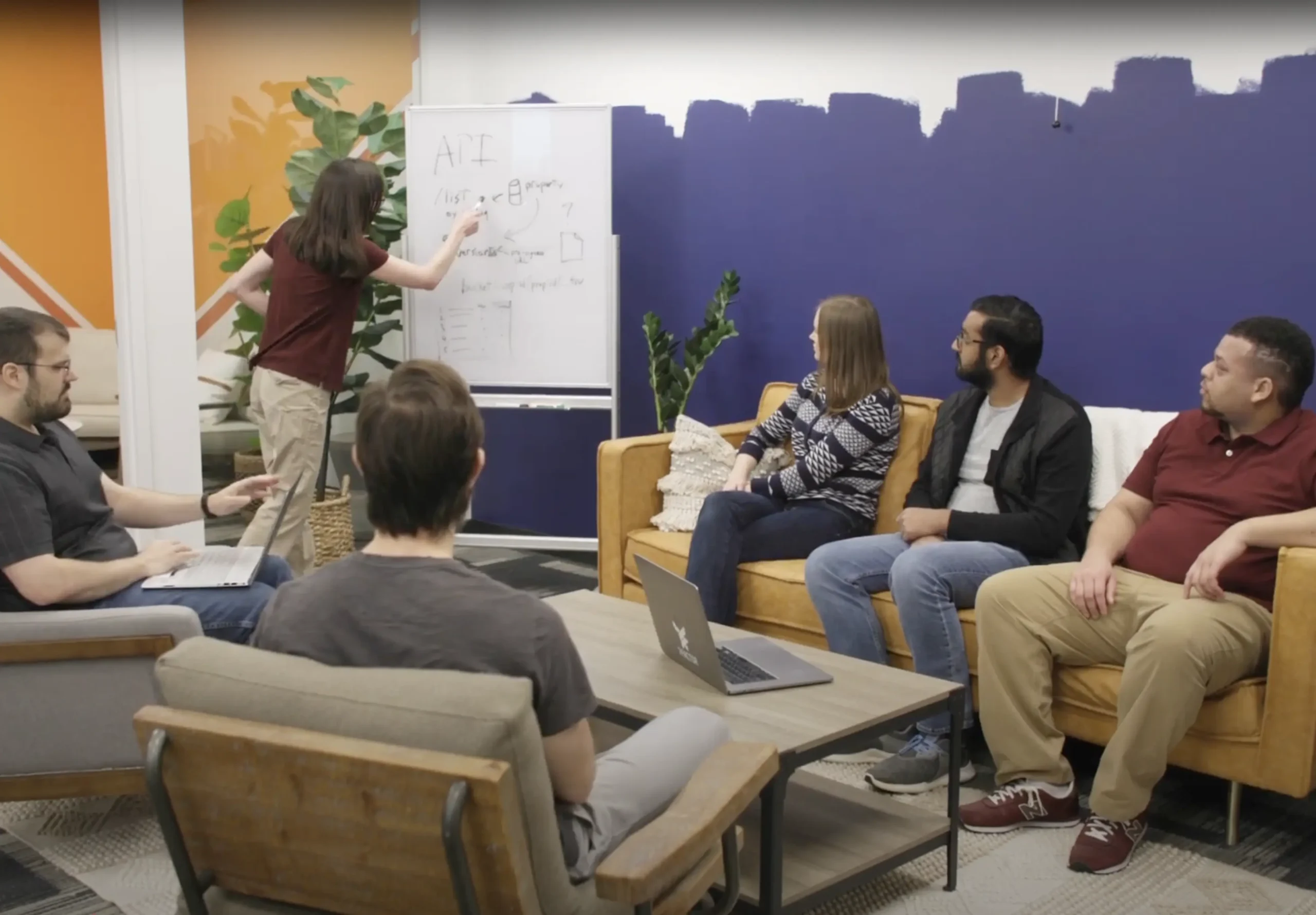
Our CEO and founder, Jeremy Duvall, built 7Factor with one core principle in mind: be human-centric. That mindset is part of a bigger concept; one rooted in genuine care, respect, and attentiveness. It shows up in small, everyday moments: like giving someone a few minutes to pause and quiet their barking dog during a Zoom call, or sharing an article with a peer because they mentioned it was part of their interests. 7Factor wouldn’t be what it is without the people who make it, and we do not take that for granted.
We don’t believe in treating employees like cogs in the machine because they aren’t. To us, retention isn’t just a hiring metric; it’s validation that when you build a company grounded in human-centric values, people stay. Not because they have to, but because they want to. Happy employees create stronger teams and thoughtful solutions.
Our 7 Factors
Engineering with purpose. building with heart.
Teach and Elevate
We share knowledge freely and raise the bar for everyone.

Do No Harm
Quality, security, and trust come first – always.
Love
We genuinely care about the craft and the people we build with.
Curiosity
We never stop asking why, exploring how, and improving what we build.
Equality and Diversity
We value every perspective and create space for every voice.
Automate Everything
Repetition is a sign to build smarter systems.
Good Things
We focus on meaningful outcomes, not vanity metrics.
Traditional vs. Predictive Forecasting
Predictive forecasting replaces guesswork with data. By modeling real-world variability in scope, velocity, and risk, our teams can forecast delivery outcomes with confidence – not assumptions.
Traditional Forecasting
Predictive Forecasting
Assumes scope, team output, and risks are fixed
Adapts to uncertainty and variation
Relies on gut, experience, or simple rules
Uses data, trends, and probabilities
Doesn’t express confidence or risk
Shows likelihood ranges and confidence intervals
Shows likelihood ranges and confidence intervals
Reduces surprises and manages expectations
Quotes from the team
Get started
Let’s Build
Something Together
Human-centered engineering, built to scale with you.